
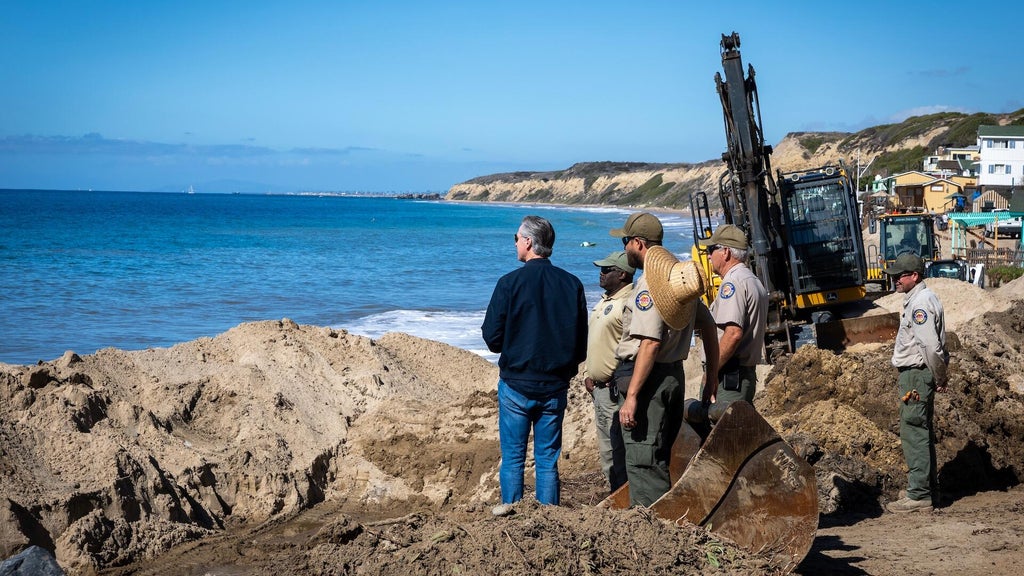
Gov. Gavin Newsom signed an executive order Tuesday to protect the Pacific Coast Highway and California coastal communities from the potential impacts of looming El Niño storms.
The order directs state agencies to prioritize preventative work before the storms hit and to begin planning for "growing climate threats facing the highway" beyond the storm season.
"Highway 1 is more than our nation's most iconic roadway. It keeps our coastal economy moving. It gets people to work, children to school, goods to local businesses, first responders where they're needed most, and visitors to our legendary beaches," Newsom said in a statement. "We know what repeated closures cost these communities, and we're putting state agencies to work now to reduce the danger before storms hit."
Newsom signed the order from Crystal Cove State Park in Newport Beach, where emergency repair work recently shut down part of PCH after a large crack formed in a cliff under the highway between Newport Beach and Laguna Beach.
The governor's release noted the importance of keeping essential infrastructure open, especially during times of emergency when some people may need to evacuate their homes. It also added that financial impacts from weather-related disasters have been "enormous," citing a Climate Central report that said such instances have caused $3.3 trillion nationwide since 1980.
Newsom recently proclaimed a state of emergency in September due to the El Niño, which some forecasters predict could be the strongest on record. He also signed an executive order at the time, giving agencies additional tools to help reduce flood risks and protect coastal communities and critical state infrastructure from storm impacts.
"The stakes are already clear: emergency project expenditures on the Big Sur Highway 1 corridor totaled approximately $312 million from 2020 through 2026," Newsom's release said. "Today's action focuses on reducing risk before more damage occurs, especially by protecting the communities and businesses that bear the costs of repeated closures."
Now, California State Transportation Agency and California Natural Resources Agency officials will lead a Highway 1 Task Force to prepare the corridor for El Niño storms, identify vulnerable stretches, recommend actions and funding needs, and find ways to complete preventive work faster.
The Golden State is already feeling the impact of El Niño, even though the event isn't expected to peak until late November, according to the National Oceanic and Atmospheric Administration. Several Southern California communities have been hit by flooding, coastal erosion and considerable damage from a series of tropical storms and hurricanes that formed in the Pacific Ocean, along with a rare phenomenon called a Kelvin wave.


